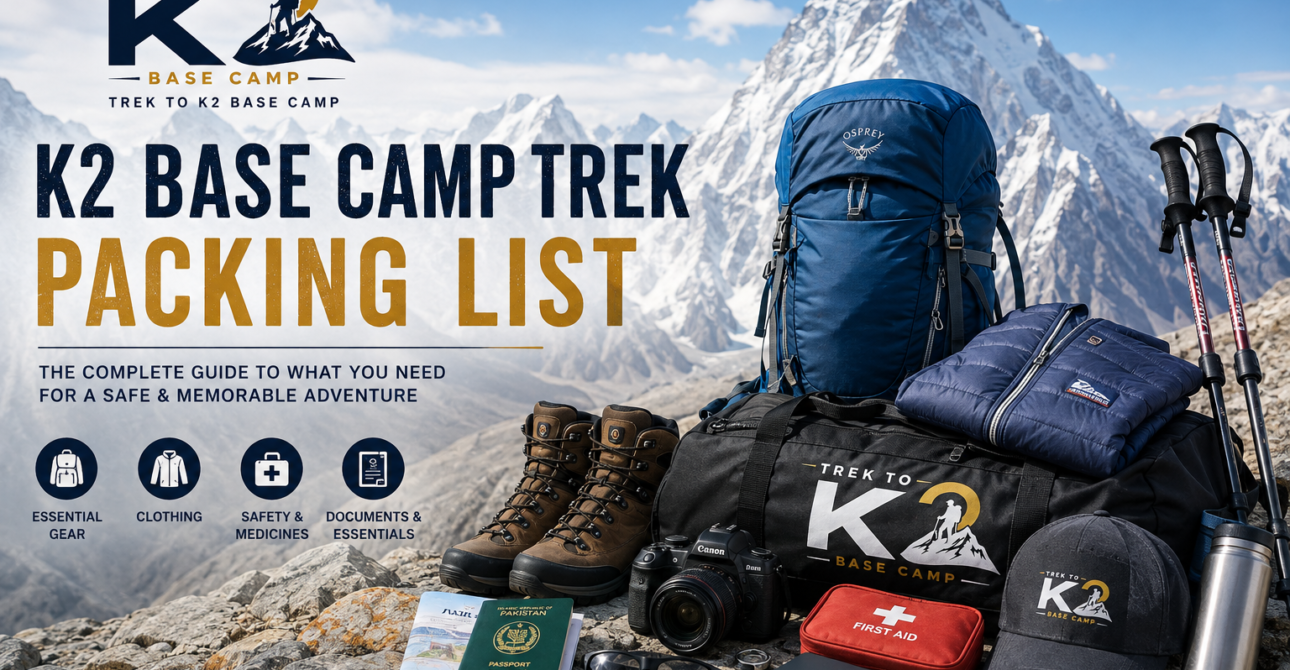
Packing for the K2 Base Camp Trek is far more than simply filling a backpack with warm clothes and trekking gear. This expedition takes you deep into Pakistan’s remote Karakoram Mountains, where weather conditions can change within minutes, temperatures can drop well below freezing at night, and modern facilities are almost nonexistent. Carrying the right equipment can make the difference between an enjoyable adventure and an unnecessarily difficult experience.
Unlike many popular trekking destinations, the journey to K2 Base Camp follows the rugged Baltoro Glacier for several days and reaches altitudes above 5,000 meters (16,400 feet). Trekkers face long walking days, rocky moraine, glacier crossings, strong winds, and significant temperature variations between daytime and nighttime. Because of these demanding conditions, every item you pack should have a clear purpose.
Another important factor is the remoteness of the trek. Once you leave Skardu and begin the drive to Askole—the last permanent village before the trail—there are virtually no outdoor gear shops or places to replace forgotten equipment. If you arrive without an essential item such as a waterproof jacket, warm gloves, or proper trekking boots, finding a replacement during the expedition may be impossible.
Many trekkers compare K2 Base Camp with the Everest Base Camp Trek, but packing requirements are quite different. While Everest offers more villages, tea houses, and opportunities to purchase supplies along the route, the K2 Base Camp Trek is a fully supported camping expedition. This means you must be prepared for colder nights, more isolated camps, and a wilderness environment where self-sufficiency is essential.
This complete K2 Base Camp Trek Packing List (2027) has been created by experienced local trekking professionals to help you prepare with confidence. Whether you’re joining our 21-day K2 Base Camp Trek, this guide covers everything you need—from clothing and footwear to sleeping gear, personal medications, electronics, travel documents, and expert packing tips.
Why Packing Properly Matters for the K2 Base Camp Trek
Packing correctly is one of the most important factors in the success of your K2 Base Camp Trek. Even experienced hikers can struggle if they carry the wrong equipment or forget essential items. The Karakoram Mountains are known for their unpredictable weather, rugged terrain, and remote wilderness, meaning there are very few opportunities to replace forgotten gear once the trek begins. A well-planned packing list not only improves your comfort but also plays a major role in your safety, health, and overall trekking experience.
Extreme Weather Conditions
The weather in the Karakoram is highly unpredictable. A sunny morning can quickly turn into snowfall, rain, or strong glacier winds within a few hours. Daytime temperatures may feel comfortable while walking, but nights at higher camps such as Goro II, Concordia, and K2 Base Camp often fall below freezing. Waterproof clothing, insulated layers, and windproof outer shells are essential to stay warm and dry throughout the expedition.
High Altitude Challenges
The trek gradually climbs from around 3,000 meters in Askole to more than 5,100 meters at K2 Base Camp. As altitude increases, temperatures decrease and your body works harder with less oxygen. Cold weather combined with high altitude increases the risk of fatigue and altitude-related illnesses. Wearing proper layered clothing allows you to regulate body temperature efficiently while protecting yourself from harsh mountain conditions.
Trekking Across the Baltoro Glacier
Much of the route follows the famous Baltoro Glacier, one of the longest glaciers outside the polar regions. The terrain is rocky, uneven, and constantly changing, requiring sturdy trekking boots with good ankle support and trekking poles for stability. Lightweight or unsuitable footwear can quickly lead to blisters, sore feet, and unnecessary exhaustion during long trekking days.
Remote Expedition Environment
Unlike many famous trekking destinations, there are no permanent hotels, restaurants, or outdoor equipment shops along the K2 Base Camp route. Once you leave Skardu for Askole, you’ll spend the following days camping in remote wilderness surrounded by glaciers and towering peaks. Every essential item—from personal medications to spare batteries and toiletries—should be packed before the expedition begins because replacing forgotten gear is rarely possible.
Weight Limits Matter
Although porters carry your main duffel bag, weight limits are strictly enforced to protect both the porters and the expedition logistics. Most operators allow approximately 15 kg (33 lbs) for the porter bag, while trekkers carry only a small daypack containing water, snacks, extra clothing, and personal valuables. Packing smartly helps reduce unnecessary weight while ensuring you still have everything needed for a safe and comfortable journey.
The Importance of Layering
One of the biggest mistakes first-time trekkers make is relying on a single heavy jacket instead of a proper layering system. Mountain weather changes frequently throughout the day, and your clothing should adapt just as quickly. A combination of moisture-wicking base layers, insulating mid-layers, and waterproof outer shells allows you to stay comfortable whether you’re climbing in the morning sun, crossing windy glaciers, or relaxing at camp after sunset. Layering also helps prevent overheating while walking and keeps you warm when temperatures suddenly drop.
Ultimately, careful packing allows you to focus on enjoying the breathtaking scenery of the Karakoram instead of worrying about discomfort or missing equipment. A thoughtfully packed backpack means greater comfort, improved safety, and a much more enjoyable journey to one of the most spectacular trekking destinations on Earth.
Essential Clothing Checklist
Choosing the right clothing is one of the most important parts of preparing for the K2 Base Camp Trek. Temperatures vary dramatically throughout the expedition, with warm afternoons at lower elevations and freezing nights above 4,500 meters. Instead of carrying bulky clothing, experienced trekkers rely on a layering system that allows them to adapt quickly to changing weather conditions. The following clothing checklist will help you stay warm, dry, and comfortable from Askole to K2 Base Camp.
Base Layers
Base layers are worn directly against your skin and are responsible for keeping moisture away from your body. During long trekking days, your body generates heat and sweat, even in cold weather. Cotton absorbs moisture and stays wet, making you feel cold once you stop walking. Instead, choose lightweight merino wool or synthetic base layers that dry quickly and regulate body temperature.
You should carry at least two long-sleeve base layer tops and two thermal bottoms. This allows you to rotate clothing while one set dries. Base layers are especially useful during early morning starts, cold evenings, and while sleeping at high-altitude camps.
Recommended:
- 2 moisture-wicking thermal tops
- 2 thermal leggings or bottoms
- Merino wool or synthetic fabric
- Avoid cotton clothing
Mid Layers
Mid layers provide insulation by trapping body heat while allowing moisture to escape. A fleece jacket or lightweight softshell is usually sufficient during active trekking when temperatures are cool but not freezing. These layers are easy to remove when the weather warms up and add back on when strong winds or clouds move in.
A good fleece jacket is one of the most frequently used items on the trek because it provides warmth without adding excessive weight.
Recommended:
- 1 fleece jacket
- 1 lightweight insulated jacket or softshell
- Breathable and quick-drying materials
Insulation Layer
Your insulation layer is designed to keep you warm during breaks, evenings at camp, and cold mornings. Unlike fleece, this layer provides much greater warmth and is essential once you reach higher camps such as Goro II, Concordia, and K2 Base Camp.
A lightweight synthetic insulated jacket or a packable down jacket works well as an additional warm layer. Many trekkers wear this over their fleece while relaxing around camp after a long trekking day.
Recommended:
- 1 insulated jacket
- Lightweight and compressible
- Suitable for sub-zero temperatures
Waterproof Shell
Mountain weather in the Karakoram can change rapidly. Even during the peak trekking season, rain, snow, and glacier winds are possible. A waterproof shell protects you from rain while also acting as a windproof barrier against cold mountain gusts.
Choose a breathable waterproof jacket with an adjustable hood and waterproof zippers. A matching pair of waterproof over-trousers is also recommended for unexpected storms or wet glacier conditions.
Recommended:
- Waterproof jacket (Gore-Tex or similar)
- Waterproof over-trousers
- Windproof and breathable
- Adjustable hood
Trekking Pants
Comfortable trekking pants are essential because you’ll spend 6–9 hours walking on most trekking days. Lightweight, quick-drying hiking pants provide the best balance between comfort and durability.
Convertible trekking pants are popular because they can be adjusted as temperatures change. Avoid jeans or heavy cotton trousers since they become uncomfortable and take a long time to dry.
Recommended:
- 2 pairs of trekking pants
- Quick-drying fabric
- Stretchable and durable
- Optional convertible zip-off design
Down Jacket
A high-quality down jacket is one of the most important items in your packing list. Temperatures at Concordia and K2 Base Camp frequently fall below freezing after sunset, and a warm down jacket provides essential insulation while you’re resting, eating dinner, or watching sunrise over the Karakoram.
Choose a lightweight jacket filled with responsibly sourced down or high-quality synthetic insulation that packs easily into your duffel bag.
Recommended:
- Warm down jacket
- Hooded design preferred
- Lightweight and compressible
- Comfortable for temperatures below 0°C
Gloves
Cold hands can quickly become uncomfortable at high altitude, especially during early morning starts or windy glacier crossings. Carrying two different pairs of gloves allows you to stay comfortable in varying conditions.
Lightweight fleece gloves are suitable for normal trekking, while insulated waterproof gloves provide extra protection in freezing temperatures or snowfall.
Recommended:
- Lightweight fleece gloves
- Waterproof insulated gloves
- Optional glove liners for extra warmth
Hats & Buff
Protecting your head and neck from both cold and strong sunlight is essential. A warm wool or fleece beanie keeps you comfortable during chilly mornings and evenings, while a lightweight sun hat protects you during long days on the glacier.
A multifunctional buff is one of the most versatile accessories you can carry. It can be used as a neck warmer, face covering against dust, headband, or extra layer under your hat.
Recommended:
- Warm beanie
- Wide-brim sun hat or cap
- Buff or neck gaiter
- Optional balaclava for colder conditions
Socks
Your feet will spend many hours inside trekking boots, making quality socks extremely important. Merino wool trekking socks reduce friction, wick away moisture, and help prevent blisters during long hiking days.
Carry several pairs so you always have a dry set available. Lightweight liner socks can also help reduce rubbing and improve comfort.
Recommended:
- 4–5 pairs of trekking socks
- 2 pairs of warm sleeping socks
- Merino wool preferred
- Optional liner socks
Camp Shoes
After spending the entire day in trekking boots, changing into lightweight camp shoes provides welcome relief for your feet. Camp shoes are useful around campsites, during meals, and while relaxing in the evenings.
Simple sandals, lightweight sports shoes, or insulated camp slippers are all suitable options, provided they are lightweight and easy to pack.
Recommended:
- Lightweight sandals or camp shoes
- Comfortable for campsite use
- Easy to slip on and off
Footwear Guide
Your footwear can make or break your K2 Base Camp Trek. The Baltoro Glacier is covered with loose rocks, uneven moraine, ice, and rugged terrain that places significant stress on your feet and ankles. Choosing the right boots and supporting accessories reduces fatigue, prevents injuries, and makes long trekking days far more comfortable.
Trekking Boots
A sturdy pair of trekking boots is one of the most important investments for this expedition. Boots should provide excellent ankle support, strong grip, and waterproof protection while remaining comfortable enough for consecutive days of hiking.
Always break in your boots before arriving in Pakistan. New boots often cause blisters during the first few days of trekking, which can become a serious problem on a multi-day expedition.
Recommended:
- Waterproof hiking boots
- High ankle support
- Vibram or similar grip
- Well broken-in before the trek
Gaiters
Gaiters cover the gap between your boots and trousers, preventing rocks, dust, snow, and water from entering your footwear. They are especially useful while crossing glacier sections and loose moraine around Baltoro Glacier and Gondogoro La.
Although not always mandatory during the standard K2 Base Camp Trek, gaiters provide extra protection and are highly recommended, particularly for early or late season departures.
Recommended:
- Waterproof gaiters
- Lightweight design
- Easy to attach over boots
Camp Sandals
Once you reach camp each afternoon, removing your heavy trekking boots gives your feet time to recover. Lightweight sandals or slip-on shoes allow your feet to breathe while walking around camp or visiting the dining tent.
They also provide a convenient backup in case your trekking boots become wet.
Recommended:
- Lightweight sandals
- Comfortable campsite footwear
- Quick-drying materials
Insoles
High-quality insoles improve comfort during long trekking days by providing additional cushioning and arch support. They can significantly reduce foot fatigue, especially on the rocky terrain of the Baltoro Glacier.
Trekkers with flat feet or previous foot injuries often benefit from custom orthotic insoles fitted before the expedition.
Recommended:
- Cushioned hiking insoles
- Good arch support
- Replace worn factory insoles before the trek
Backpack & Duffel Bag
Choosing the right bags is just as important as choosing the right clothing or trekking boots. During the K2 Base Camp Trek, your equipment is divided into two separate bags: a main duffel bag, which is carried by porters, and a daypack, which you carry yourself throughout the trek. Packing both bags efficiently helps reduce unnecessary weight while ensuring that essential items remain easily accessible during long trekking days.
Main Duffel Bag
Your main duffel bag will carry most of your personal equipment, including spare clothing, sleeping gear, toiletries, and other items that you won’t need while walking. Throughout the trek, this bag is transported by porters or pack animals between camps, so you only receive it after arriving at each campsite.
Most trekking operators, including World Adventure Tours, allow a maximum porter load of 15 kg (33 lbs) per person. Packing within this limit is important because overweight bags may require additional porter fees or force you to leave unnecessary items behind.
Choose a durable, waterproof duffel bag with strong handles and heavy-duty zippers. A capacity of 80–100 liters is ideal for carrying everything required during the expedition while remaining easy for porters to handle.
Recommended:
- Waterproof duffel bag (80–100 L)
- Maximum packed weight: 15 kg (33 lbs)
- Durable material with reinforced handles
- Lockable zippers
- Clearly label your name and contact details
Daypack
Your daypack stays with you throughout every trekking day and should contain all the essentials you may need before reaching the next campsite. This includes water, snacks, an extra warm layer, rain jacket, camera, sunscreen, sunglasses, passport, medications, and other personal valuables.
Since you’ll carry this backpack for several hours each day, it should be lightweight, comfortable, and equipped with padded shoulder straps and a supportive hip belt. A backpack between 30 and 40 liters provides enough space without becoming too bulky.
Remember that a heavier backpack means more energy is required throughout the trek, so pack only what you’ll actually use during the day.
Recommended:
- 30–40 L trekking backpack
- Adjustable hip belt and chest strap
- Hydration bladder compatible
- Multiple compartments for easy organization
- Weight while trekking: ideally under 6–8 kg
Rain Cover
Although the trekking season generally offers stable weather, sudden rain showers, snowfall, and glacier winds can occur without warning. A waterproof rain cover protects your backpack and keeps clothing, electronics, documents, and sleeping gear dry.
Many trekking backpacks include a built-in rain cover, but if yours doesn’t, purchasing one separately is highly recommended. Even if your backpack is advertised as waterproof, an external rain cover provides additional protection during prolonged bad weather.
Recommended:
- Waterproof backpack rain cover
- Bright color for visibility
- Correct size for your backpack
- Keep easily accessible for sudden weather changes
Dry Bags
Dry bags are one of the simplest but most valuable packing accessories for the K2 Base Camp Trek. They keep your clothing, electronics, and sleeping gear completely dry even if your duffel bag is exposed to rain, river crossings, or damp campsite conditions.
Using several small dry bags instead of one large bag also helps organize your equipment more efficiently. For example, one bag can hold clothing, another toiletries, and another electronics, making it easier to find items without unpacking your entire duffel.
Recommended:
- Waterproof dry bags (5–20 L)
- Separate bags for clothing, electronics, and toiletries
- Lightweight roll-top design
- Compression dry bags save additional space
Sleeping Gear
A good night’s sleep is essential for recovering after long trekking days across the Baltoro Glacier. As the expedition gains altitude, temperatures become significantly colder, particularly at camps such as Goro II, Concordia, and K2 Base Camp, where nighttime temperatures often fall well below freezing. Carrying suitable sleeping gear ensures better rest, improved recovery, and greater comfort throughout the journey.
Sleeping Bag
A high-quality sleeping bag is one of the most important pieces of equipment for the K2 Base Camp Trek. Even during the peak trekking season, nights at higher camps can be extremely cold, making proper insulation essential.
Choose a sleeping bag with a comfort rating between -15°C and -20°C (5°F to -4°F). Down sleeping bags are lighter and pack smaller, while synthetic bags perform better in damp conditions. Both are suitable provided they meet the required temperature rating.
If you don’t own a suitable sleeping bag, quality rental options are available in Skardu through many trekking operators.
Recommended:
- Comfort rating: -15°C to -20°C
- Mummy-shaped design
- Down or premium synthetic insulation
- Compression sack included
Sleeping Bag Liner
A sleeping bag liner adds an extra layer of warmth while also helping keep your sleeping bag clean during the expedition. It absorbs sweat and body oils, reducing the need to wash the sleeping bag after every trek.
Lightweight fleece liners provide additional insulation during colder nights, while silk or microfiber liners are ideal for warmer conditions because they are lighter and dry quickly.
Many experienced trekkers consider a liner one of the best small additions to their packing list because it increases comfort without adding much weight.
Recommended:
- Silk, fleece, or microfiber liner
- Adds 3–8°C of warmth
- Easy to wash and dry
- Lightweight and compact
Pillow
After walking for six to nine hours each day, proper neck support can make a noticeable difference in your quality of sleep. While some trekkers use spare clothing inside a stuff sack as a pillow, many now prefer lightweight inflatable travel pillows because they provide greater comfort while taking up very little space.
A good night’s sleep improves recovery, helping you stay energized for the following day’s trek.
Recommended:
- Lightweight inflatable pillow
- Compressible camping pillow
- Optional pillowcase for added comfort
Sleeping Mat (If Required)
For most organized K2 Base Camp expeditions, trekking companies provide foam or inflatable sleeping mats as part of the camping equipment. However, it’s always worth confirming this before your trip.
If your operator does not supply a sleeping mat, carrying a lightweight inflatable or insulated sleeping pad will significantly improve sleeping comfort by providing insulation from the cold ground and reducing pressure on your hips and shoulders.
Recommended:
- Lightweight inflatable sleeping mat
- Good insulation (high R-value)
- Compact and easy to pack
- Confirm with your trekking operator whether one is already included before bringing your own
Trekking Equipment
Having the right trekking equipment can significantly improve your comfort, safety, and overall experience on the K2 Base Camp Trek. Unlike shorter hiking trips, this expedition takes you deep into the remote Karakoram Mountains, where you’ll spend nearly three weeks camping and trekking across glaciers, rocky moraine, and high mountain passes. Investing in reliable equipment before the trek helps you stay comfortable while reducing the risk of injury or equipment failure.
Trekking Poles
Trekking poles are one of the most useful pieces of equipment for the K2 Base Camp Trek. They improve balance on uneven terrain, reduce pressure on your knees during long descents, and provide additional stability while walking across the Baltoro Glacier. Many trekkers notice significantly less fatigue when using poles consistently throughout the expedition.
Choose lightweight, adjustable aluminum or carbon fiber trekking poles with comfortable grips and reliable locking mechanisms. Before the trek begins, adjust the poles to your height and practice using them on uneven trails.
Recommended:
- Adjustable trekking poles
- Aluminum or carbon fiber
- Comfortable cork or foam grips
- Replaceable rubber tips
Headlamp
A headlamp is essential for moving around camp before sunrise or after sunset. It is also extremely useful if you need to visit the toilet tent during the night or prepare for an early morning departure. Unlike handheld flashlights, a headlamp keeps both hands free, making it much safer and more convenient.
Carry spare batteries or ensure your rechargeable headlamp is fully charged before leaving Skardu.
Recommended:
- LED headlamp
- Brightness of at least 200–300 lumens
- Rechargeable or spare batteries
- Waterproof or water-resistant design
Water Bottles
Staying hydrated is extremely important at high altitude. Dehydration increases the risk of fatigue and altitude sickness, so every trekker should carry enough water throughout the day.
Most trekkers carry two reusable water bottles with a combined capacity of at least 2 liters. Metal or BPA-free plastic bottles are both suitable, and insulated bottles help prevent water from freezing during colder nights.
Recommended:
- Two 1-liter bottles
- BPA-free or stainless steel
- Leak-proof design
- Easy to refill
Hydration Bladder
Many trekkers prefer a hydration bladder because it allows them to drink water without stopping or removing their backpack. This encourages more frequent hydration throughout the day, which is especially beneficial at high altitude.
A 2–3 liter hydration reservoir fits easily inside most trekking backpacks. Be sure to clean and dry it properly after each expedition.
Recommended:
- 2–3 L hydration bladder
- Compatible with your backpack
- Leak-proof hose and bite valve
- Easy to clean
Sunglasses
The combination of high altitude, bright sunlight, and reflective glacier ice creates extremely strong UV exposure. Without proper eye protection, trekkers can suffer from snow blindness, eye strain, and headaches.
Choose sunglasses with Category 3 or Category 4 UV protection that provide full coverage around the eyes.
Recommended:
- UV400 protection
- Polarized lenses preferred
- Category 3 or 4 lenses
- Protective carrying case
Sunscreen
Even on cloudy days, ultraviolet radiation is much stronger above 4,000 meters. Long hours on the glacier can quickly cause severe sunburn if your skin is not properly protected.
Apply sunscreen before leaving camp each morning and reapply throughout the day, especially after sweating.
Recommended:
- SPF 50+
- Water-resistant formula
- Broad-spectrum UVA & UVB protection
- Small travel-size bottle
Lip Balm
Cold temperatures, dry mountain air, and strong winds often cause cracked lips during the expedition. A moisturizing lip balm with SPF protection helps prevent painful dryness while protecting your lips from sun exposure.
Carry it in an easily accessible pocket because you’ll likely use it several times each day.
Recommended:
- SPF 30 or higher
- Moisturizing formula
- Wind protection
- Small pocket-size tube
Multi-tool
A compact multi-tool can be surprisingly useful during the trek. It can help repair trekking poles, tighten loose screws, cut cord, open food packaging, or solve small equipment problems around camp.
There’s no need to carry a heavy survival knife—a lightweight multi-tool is more than sufficient for most trekkers.
Recommended:
- Lightweight multi-tool
- Knife, scissors, screwdriver
- Bottle opener
- Compact design
Power Bank
Electricity is unavailable at most camps during the K2 Base Camp Trek, making a power bank essential for charging your phone, camera, GPS device, or headlamp.
A high-capacity power bank should last several days before needing a recharge. Cold temperatures reduce battery performance, so keep electronics inside your sleeping bag at night.
Recommended:
- 20,000–30,000 mAh power bank
- Fast charging support
- USB-C preferred
- Keep warm in cold weather
Camera
The Karakoram offers some of the most spectacular mountain scenery on Earth, making a camera one of the most rewarding items to carry. From the Baltoro Glacier to Concordia and K2 Base Camp, you’ll encounter incredible photographic opportunities every day.
Whether you use a DSLR, mirrorless camera, or smartphone, carry extra batteries because cold temperatures drain battery life much faster than usual.
Recommended:
- DSLR, mirrorless camera, or smartphone
- Spare batteries
- Extra memory cards
- Lightweight protective case
Personal Toiletries
Although the K2 Base Camp Trek is a remote camping expedition, maintaining personal hygiene remains important for your health and comfort. Since shower facilities are extremely limited and you’ll spend several weeks in the wilderness, lightweight travel-sized toiletries are the best choice. Pack only the essentials to save space while still staying clean and comfortable throughout the journey.
Toothbrush
A lightweight travel toothbrush is sufficient for the expedition. Brushing your teeth twice daily helps maintain oral hygiene during the trek.
Recommended:
- Foldable or travel toothbrush
- Protective toothbrush case
Toothpaste
Carry a small travel-size toothpaste rather than a full-size tube to reduce weight and save packing space.
Recommended:
- Travel-size toothpaste
- Enough for the entire expedition
Wet Wipes
Wet wipes are one of the most valuable hygiene items during the trek. Since hot showers are generally unavailable, biodegradable wet wipes help you freshen up after long hiking days and keep your hands and face clean.
Recommended:
- Biodegradable wet wipes
- Unscented preferred
- Resealable packaging
Toilet Paper
Although most organized expeditions provide toilet tents, you should always carry your own toilet paper. Keep it inside a waterproof bag to protect it from moisture.
Recommended:
- 2–3 rolls
- Waterproof storage bag
- Compact travel roll
Soap
Choose a biodegradable soap that can safely be used outdoors. Small multi-purpose camping soaps work well for washing hands, face, and clothing when necessary.
Recommended:
- Biodegradable soap
- Travel-size bottle
- Multi-purpose camping soap
Hand Sanitizer
Hand hygiene is especially important before meals and after using toilet facilities. Alcohol-based hand sanitizer provides quick protection when clean water isn’t immediately available.
Recommended:
- Alcohol-based sanitizer (60%+)
- Pocket-size bottle
- Easy-access location in your daypack
Nail Cutter
Long nails can become uncomfortable during extended trekking and increase the risk of dirt buildup or accidental injury. A small nail cutter takes almost no space and is useful during longer expeditions.
Recommended:
- Compact nail clipper
- Lightweight design
Towel
A quick-drying microfiber towel is much lighter than a regular cotton towel and dries rapidly after use. It is ideal for washing your face, drying off after limited showers, or cleaning gear.
Recommended:
- Microfiber towel
- Lightweight
- Quick-drying
- Compact storage pouch
Moisturizer
The cold, dry mountain air often causes dry skin, especially on your hands and face. Applying moisturizer each evening helps prevent cracked skin and keeps you more comfortable throughout the trek.
Recommended:
- Travel-size moisturizer
- Non-greasy formula
- Suitable for sensitive skin
- Apply daily, especially before sleeping
First Aid & Medicines
Although every organized K2 Base Camp Trek carries a comprehensive group first aid kit, each trekker should also bring a personal medical kit containing essential medicines and basic medical supplies. The Karakoram is extremely remote, and once you leave Askole, pharmacies and medical stores are no longer available. Carrying the right medications allows you to treat minor health issues immediately and continue enjoying the expedition comfortably.
Always consult your doctor before taking any medication, especially those related to high-altitude trekking.
Diamox (Acetazolamide)
Diamox is one of the most commonly used medications for preventing and reducing the symptoms of Acute Mountain Sickness (AMS). While it is not compulsory, many trekkers carry it as a precaution, especially if they have never trekked above 4,000 meters.
Remember that Diamox does not replace proper acclimatization. The safest way to avoid altitude sickness is to ascend gradually, stay hydrated, and listen to your guide’s advice.
Recommended:
- Consult your doctor before use
- Carry enough tablets for the expedition
- Begin only if recommended by your physician
Painkillers
Minor headaches, muscle soreness, and joint pain are common during long trekking days. Carrying basic pain relief medication helps you stay comfortable after hiking across glaciers and rocky terrain.
Choose medicines that you have used before and know are suitable for your body.
Recommended:
- Paracetamol
- Ibuprofen (if suitable)
- Small travel-size pack
Bandages
Small cuts and scrapes are common during mountain trekking. A few adhesive bandages and basic wound dressings can quickly protect minor injuries from dirt and infection until proper treatment is available.
Recommended:
- Adhesive bandages
- Sterile gauze pads
- Medical tape
- Small antiseptic wipes
Blister Kit
Blisters are one of the most common problems on long-distance treks. Even well-fitted boots can occasionally cause friction during consecutive trekking days.
A blister kit allows you to treat hot spots early before they become painful blisters that affect your walking.
Recommended:
- Blister plasters (Compeed or similar)
- Moleskin
- Small scissors
- Antiseptic cream
ORS (Oral Rehydration Salts)
Long hours of trekking combined with dry mountain air increase the risk of dehydration. ORS helps replace lost fluids and minerals more effectively than water alone and can be particularly helpful if you experience stomach problems or excessive sweating.
Recommended:
- 5–10 ORS sachets
- Easy-to-mix powder packets
- Store in a waterproof bag
Electrolytes
Electrolyte tablets or powder help maintain proper hydration and reduce muscle fatigue during long trekking days. Adding electrolytes to your drinking water is a simple way to replace important minerals lost through sweat.
Many experienced trekkers drink one bottle of electrolyte water each day, particularly while trekking between Urdukas, Goro II, Concordia, and K2 Base Camp.
Recommended:
- Electrolyte tablets or powder
- Sugar-free options preferred
- Carry enough for the entire trek
Prescription Medicines
If you take prescription medication regularly, bring enough to last the entire expedition plus a few extra days in case of unexpected travel delays. Keep all medicines in their original packaging along with a copy of your prescription.
Always carry essential medications in your daypack rather than your porter bag so they remain accessible at all times.
Recommended:
- Personal prescription medicines
- Copy of prescription
- Extra supply for emergencies
- Waterproof storage pouch
Electronics
Although the K2 Base Camp Trek takes you into one of the world’s most remote mountain regions, electronic devices remain valuable for navigation, photography, communication, and recording your adventure. Since electricity is very limited once the trek begins, it’s important to carry reliable charging equipment and protect your devices from cold temperatures and moisture.
Phone
Your smartphone serves multiple purposes during the expedition, including taking photos, recording GPS tracks, reading offline maps, and staying connected whenever a network is available. Mobile coverage disappears shortly after leaving Askole, so download any maps or important information before the trek begins.
Protect your phone with a durable waterproof case and keep it warm inside your jacket during cold weather to preserve battery life.
Recommended:
- Smartphone with offline maps
- Waterproof protective case
- Screen protector
- Airplane mode to save battery
Camera
The K2 Base Camp Trek offers countless opportunities for breathtaking photography. Whether you carry a professional DSLR, mirrorless camera, or compact camera, you’ll want to capture the incredible landscapes of Baltoro Glacier, Concordia, and the world’s highest peaks.
Bring sufficient memory cards and keep spare batteries warm because cold temperatures significantly reduce battery performance.
Recommended:
- DSLR or mirrorless camera
- Extra memory cards
- Protective camera bag
- Lens cleaning cloth
Drone (Rules)
Many trekkers enjoy capturing aerial footage of the Karakoram, but drones are subject to regulations in Pakistan. Flying a drone may require official permission from the relevant authorities, especially in sensitive mountain regions. Some national parks and restricted areas may prohibit drone flights entirely.
If you plan to bring a drone, check the latest regulations before traveling and always respect local rules, wildlife, and fellow trekkers.
Recommended:
- Verify drone regulations before arrival
- Carry spare propellers
- Extra drone batteries
- Fly only where permitted
Chargers
Carry all the necessary charging cables for your electronic devices and organize them in a small waterproof pouch. Fast chargers reduce charging time whenever electricity becomes available in hotels before or after the trek.
Recommended:
- Phone charger
- Camera charger
- Watch charger
- USB-C or Lightning cables
- Waterproof cable organizer
Universal Adapter
If you’re traveling from overseas, a universal travel adapter ensures your devices can be charged in Pakistan. Most hotels in Islamabad and Skardu provide standard Pakistani electrical outlets, so a universal adapter is a convenient solution for international visitors.
Recommended:
- Universal travel adapter
- Multiple USB ports preferred
- Lightweight design
Solar Charger
For longer expeditions, a lightweight solar charger can provide additional power during sunny trekking days. While not essential for every trekker, it can be useful if you’re carrying multiple electronic devices or spending extended periods in the mountains.
Recommended:
- Foldable solar panel
- USB charging output
- Weather-resistant design
- Lightweight construction
Spare Batteries
Cold mountain temperatures quickly reduce battery performance, making spare batteries essential for cameras, drones, GPS devices, and headlamps. Keep all batteries inside your sleeping bag overnight or in an inner jacket pocket during the day to help maintain their charge.
Recommended:
- Camera batteries
- Drone batteries (if applicable)
- Headlamp batteries
- Power bank fully charged before departure
Documents You Must Carry
Before starting your K2 Base Camp Trek, make sure all your important travel documents are properly organized and easily accessible. Since this expedition takes place in a remote region of northern Pakistan, you’ll need to present certain documents during domestic flights, hotel check-ins, permit processing, and security checkpoints. Keep all original documents in a waterproof pouch and carry digital copies on your phone or cloud storage as a backup.
Passport
Your passport is the most important document you’ll carry throughout the journey. It should remain valid for at least six months beyond your planned travel dates and have enough blank pages for immigration stamps if required.
Always keep your passport in your daypack rather than your duffel bag. Since your duffel is carried separately by porters during the trek, your passport should remain with you at all times.
Recommended:
- Original passport
- Minimum six months validity
- Waterproof document pouch
- Digital copy stored securely
Visa
International trekkers must ensure they have the correct Pakistani visa before traveling. Print a copy of your approved visa in addition to keeping a digital version on your phone.
Immigration officers, hotels, or local authorities may request to see your visa during your journey.
Recommended:
- Printed visa copy
- Digital backup
- Verify validity before departure
Travel Insurance
Comprehensive travel insurance is strongly recommended for every trekker. Your policy should specifically cover high-altitude trekking, emergency medical treatment, trip cancellation, and helicopter evacuation if required.
Before purchasing insurance, carefully check the maximum altitude covered, as some standard policies exclude trekking above 4,000 meters.
Recommended:
- High-altitude trekking coverage
- Emergency evacuation included
- Medical expenses covered
- Printed and digital policy copies
Permits
Certain areas around the Karakoram require trekking permits and registration with local authorities. In most organized expeditions, your trekking company arranges these permits before the trek begins.
Even if your operator manages the paperwork, it’s useful to carry photocopies or digital copies of the permits during the expedition.
Recommended:
- Trekking permits
- National Park permits (if applicable)
- Copies provided by your tour operator
Passport Photos
Carry several recent passport-size photographs during your trip. Although they are rarely needed during the trek itself, they can be useful for permit applications, hotel registrations, or unexpected administrative requirements.
Recommended:
- 4–6 passport-size photos
- Recent color photographs
- Stored in a waterproof envelope
Emergency Contacts
Prepare a written list of emergency contact information before leaving home. Include family members, your travel insurance emergency number, and your trekking operator’s contact details.
Although smartphones are convenient, having a printed copy is helpful if your phone battery dies or becomes damaged.
Recommended:
- Family emergency contacts
- Insurance emergency hotline
- Tour operator contact details
- Blood group and medical information
Cash
There are no ATMs beyond Skardu, and credit cards are not accepted during the expedition. Carry sufficient Pakistani Rupees to cover personal expenses, staff tips, snacks, drinks, laundry, equipment rental, and any unexpected costs.
Keep your cash divided into several locations instead of carrying it all in one wallet.
Recommended:
- Pakistani Rupees (PKR)
- Small denomination notes
- Waterproof money pouch
- Separate emergency cash reserve
Optional Items Worth Bringing
While these items are not essential for completing the K2 Base Camp Trek, they can make your expedition more comfortable, enjoyable, and memorable. Since porter weight limits apply, only pack optional items that you’ll genuinely use during the journey.
Journal
The K2 Base Camp Trek is an unforgettable adventure, and many trekkers enjoy recording their daily experiences, thoughts, and observations. A small travel journal is perfect for documenting your journey through the Karakoram and preserving memories long after the trek ends.
Recommended:
- Lightweight notebook
- Small pen or pencil
- Waterproof cover if possible
Playing Cards
Evenings at camp are a great time to relax and socialize with fellow trekkers. A simple deck of playing cards provides hours of entertainment while waiting for dinner or resting after a long day’s walk.
Recommended:
- Compact deck of cards
- Lightweight travel games
Snacks
Although your trekking team provides nutritious meals throughout the expedition, carrying your favorite snacks can provide an extra energy boost during long trekking days.
High-energy snacks are especially useful between camps when walking for several hours.
Recommended:
- Energy bars
- Mixed nuts
- Dark chocolate
- Dried fruit
- Electrolyte gummies
Kindle
A Kindle or lightweight e-reader is an excellent option for trekkers who enjoy reading during rest days or evenings at camp. It stores hundreds of books while weighing much less than carrying printed novels.
Remember to fully charge it before the expedition.
Recommended:
- Kindle or e-reader
- Protective case
- Fully charged before departure
Binoculars
The Karakoram offers spectacular opportunities to observe distant peaks, glaciers, wildlife, and climbing expeditions. A compact pair of binoculars allows you to appreciate details that are impossible to see with the naked eye.
Choose a lightweight model suitable for trekking.
Recommended:
- Compact binoculars (8×25 or 10×25)
- Lightweight design
- Protective carrying case
Small Repair Kit
A simple repair kit can solve minor equipment problems without interrupting your trek. Loose backpack straps, damaged trekking poles, or torn clothing can often be repaired quickly with a few basic tools.
Recommended:
- Duct tape (wrapped around a pen)
- Safety pins
- Needle and thread
- Zip ties
- Small cord or paracord
- Spare backpack buckle (optional)
These optional items don’t add much weight but can significantly improve your comfort and overall trekking experience, especially during a multi-day camping expedition like the K2 Base Camp Trek.
Items You Should NOT Pack
One of the biggest mistakes first-time trekkers make is bringing too many unnecessary items. Every extra kilogram makes packing more difficult and can exceed porter weight limits. Since you’ll be trekking in a remote mountain environment for nearly three weeks, it’s important to pack smart rather than pack more. Focus only on equipment that adds real value to your comfort, safety, and trekking experience.
Heavy Luggage
Avoid bringing oversized suitcases or bulky bags. Large hard-shell luggage is difficult to transport and unsuitable for mountain expeditions. Once the trek begins, your equipment will be transferred into a duffel bag carried by porters, so heavy luggage only creates unnecessary complications during travel.
Instead, use a lightweight duffel bag for trekking equipment and a small backpack for daily essentials.
Too Many Clothes
Many trekkers overpack clothing, thinking they’ll need a fresh outfit every day. In reality, you’ll wear the same trekking clothes for several days and simply change your base layers, socks, and underwear when necessary.
Packing too many clothes quickly adds unnecessary weight without providing much benefit. A proper layering system is far more effective than carrying multiple heavy jackets or extra trousers.
Hair Dryer
A hair dryer has no practical use during the K2 Base Camp Trek. There is no electricity at the mountain camps, and even in hotels before and after the trek, hair dryers are usually available if needed.
Leaving bulky electrical appliances at home saves both weight and luggage space.
Large Perfumes
Large perfume bottles are unnecessary and can easily leak inside your luggage. Strong fragrances are also impractical during a camping expedition where maintaining lightweight gear is a priority.
If you prefer using fragrance, carry a small travel-size bottle instead.
Heavy Books
Although evenings at camp provide some free time, carrying large printed books adds unnecessary weight. A lightweight Kindle or e-reader can store hundreds of books while taking up very little space.
If you enjoy reading, digital books are the better choice for this expedition.
Unnecessary Electronics
Avoid packing gadgets that you are unlikely to use. Every electronic device requires extra chargers, batteries, and power bank capacity, increasing both weight and complexity.
Bring only the electronics you truly need, such as your phone, camera, headlamp, and power bank. Leaving unnecessary devices behind makes your backpack lighter and your trek more enjoyable.
Weight Limits
Understanding luggage weight limits before arriving in Pakistan helps you avoid last-minute repacking and additional porter charges. Since the K2 Base Camp Trek is a fully supported camping expedition, your gear is divided between a porter-carried duffel bag and your personal daypack. Packing within these limits keeps the expedition organized and comfortable for both trekkers and support staff.
Porter Duffel Weight
During the trek, your main duffel bag is carried by porters between camps. Most trekking companies, including Treks To K2 Base Camp, allow a maximum weight of 25 kg (55 lbs) per trekker. This weight should include your clothing, sleeping bag, toiletries, and all other equipment stored in the duffel.
If your bag exceeds the allowed limit, you may need to remove unnecessary items or pay additional porter charges. We recommend weighing your duffel before arriving in Skardu to avoid delays at the start of the expedition.
Recommended Limit:
- Maximum weight: 25 kg (55 lbs)
- Includes all gear carried by porters
- Pack efficiently using compression sacks
- Label your duffel clearly with your name
Daypack Weight
Your daypack stays with you throughout each trekking day and should only contain items you’ll need before reaching the next campsite. Carrying excessive weight can make long trekking days far more tiring, especially while walking across the Baltoro Glacier and climbing to higher camps.
A comfortable daypack usually weighs between 5 and 8 kg, including water, snacks, a waterproof jacket, extra warm layer, camera, sunglasses, sunscreen, medications, and personal valuables.
Recommended Weight:
- Ideal weight: 5–8 kg
- 2 liters of water
- Snacks
- Rain jacket
- Warm layer
- Camera and valuables
- Personal medicines
Airline Baggage Limits
If your itinerary includes domestic flights between Islamabad and Skardu, be aware that airlines enforce baggage limits. While allowances may vary by airline and ticket type, most domestic flights permit approximately 20 kg of checked baggage and 7 kg of cabin baggage.
During periods of bad weather, flights to Skardu are sometimes cancelled and travelers continue by road via the Karakoram Highway. Packing within normal airline limits makes this transition much easier and avoids unnecessary luggage issues.
Before your departure, always check your airline’s latest baggage policy, as allowances may change.
Typical Domestic Allowance:
- Checked baggage: 20 kg
- Cabin baggage: 7 kg
- Keep important documents, electronics, and medications in your carry-on bag
- Verify baggage limits with your airline before travel
Rental Equipment in Skardu
If you don’t own specialized trekking gear, there’s no need to worry. Skardu is the main gateway to the Karakoram and offers several reputable outdoor equipment rental shops where trekkers can hire essential gear before starting the K2 Base Camp Trek. Renting equipment is an excellent option for international travelers who want to reduce airline baggage or avoid purchasing expensive gear they’ll only use once.
However, always inspect rented equipment carefully before leaving Skardu. Check zippers, insulation, waterproofing, and overall condition to ensure everything is suitable for a high-altitude expedition.
Down Jacket
A high-quality down jacket is essential for cold mornings, evenings, and high camps such as Goro II, Concordia, and K2 Base Camp. If you don’t own one, several rental shops in Skardu provide warm expedition-grade down jackets suitable for temperatures well below freezing.
When renting, make sure the jacket fits comfortably over your base and mid-layers while still allowing freedom of movement.
Average Rental Price:
- PKR 1,500–3,000 per day
- PKR 18,000–30,000 for a full expedition (depending on quality)
Sleeping Bag
A warm sleeping bag is one of the most important pieces of equipment for the trek. Most rental shops offer sleeping bags rated for -15°C to -20°C, which are suitable for the K2 Base Camp route.
Before renting, inspect the sleeping bag for cleanliness, functioning zippers, and adequate loft. Using a personal sleeping bag liner is recommended for additional warmth and hygiene.
Average Rental Price:
- PKR 1,000–2,500 per day
- PKR 12,000–25,000 for the complete trek
Trekking Poles
Trekking poles greatly improve stability on glacier terrain and reduce strain on your knees during long descents. Adjustable aluminum trekking poles are widely available for rent in Skardu and are an excellent choice if you don’t want to travel with your own.
Check that the locking mechanism works properly before leaving the rental shop.
Average Rental Price:
- PKR 300–800 per day
- PKR 4,000–8,000 for the expedition
Gaiters
Gaiters help keep rocks, dust, snow, and water out of your trekking boots while walking across glaciers and loose moraine. Although not essential during every departure, they are highly recommended, especially for early- or late-season treks.
Lightweight waterproof gaiters are commonly available in Skardu.
Average Rental Price:
- PKR 300–600 per day
- PKR 3,000–6,000 for the expedition
Crampons (If Required)
Standard K2 Base Camp Treks usually do not require crampons because the route follows established glacier trails without technical climbing. However, if you’re joining a Gondogoro La Trek, traveling early or late in the season, or encountering icy conditions, your guide may recommend lightweight crampons or microspikes.
Always follow your guide’s advice regarding crampon use and never rent technical climbing crampons unless specifically instructed.
Average Rental Price:
- PKR 500–1,000 per day
- PKR 5,000–10,000 for the expedition
Tip: If you’re booking your trek with World Adventure Tours, ask in advance which equipment is already included in your package. Many operators can also arrange high-quality rental gear before your arrival in Skardu.
Seasonal Packing Differences
Although the trekking route remains the same throughout the season, your packing list should be adjusted according to the month of departure. Weather conditions in the Karakoram vary between June and September, and understanding these differences will help you pack more efficiently without carrying unnecessary weight.
June
June marks the beginning of the trekking season. Higher camps often experience colder nights, occasional snowfall, and strong glacier winds. Early-season trekkers should prioritize extra insulation and waterproof clothing.
Packing a warmer sleeping bag, insulated gloves, and additional thermal layers is highly recommended. Gaiters may also be useful if snow remains on certain sections of the trail.
Extra Items to Consider:
- Heavier down jacket
- Warm gloves
- Extra thermal base layer
- Gaiters
- Thick wool socks
July
July is one of the most popular months for the K2 Base Camp Trek. Weather conditions are generally more stable, with warmer daytime temperatures and fewer chances of snowfall. However, nights at higher camps remain cold, so proper insulation is still essential.
Most trekkers can comfortably follow the standard packing list without adding excessive cold-weather gear.
Extra Items to Consider:
- Lightweight down jacket
- Standard thermal layers
- Sun hat
- Sunglasses
- Sunscreen
August
August usually offers the most stable weather of the trekking season and is considered the best month for visiting K2 Base Camp. Days are relatively warm, while nights remain below freezing at higher elevations.
Although heavy winter clothing is generally unnecessary, strong UV radiation and glacier reflections make sun protection extremely important.
Extra Items to Consider:
- Sunscreen SPF 50+
- UV-protection sunglasses
- Lightweight trekking clothing
- Buff or neck gaiter
- Lip balm with SPF
September
September brings cooler temperatures, quieter trails, and beautiful autumn scenery across the Karakoram. Nights become noticeably colder, particularly at Concordia and K2 Base Camp, while early snowfall becomes more likely toward the end of the month.
Trekkers departing in September should carry warmer insulation compared to July or August while maintaining a reliable waterproof layering system.
Extra Items to Consider:
- Warmer down jacket
- Extra fleece layer
- Heavy gloves
- Thermal sleeping socks
- Additional base layer
By adjusting your packing list according to the season, you’ll remain comfortable throughout the trek while avoiding unnecessary weight. Regardless of your departure month, a proper layering system, waterproof outerwear, and quality trekking boots remain essential for every successful K2 Base Camp Trek.
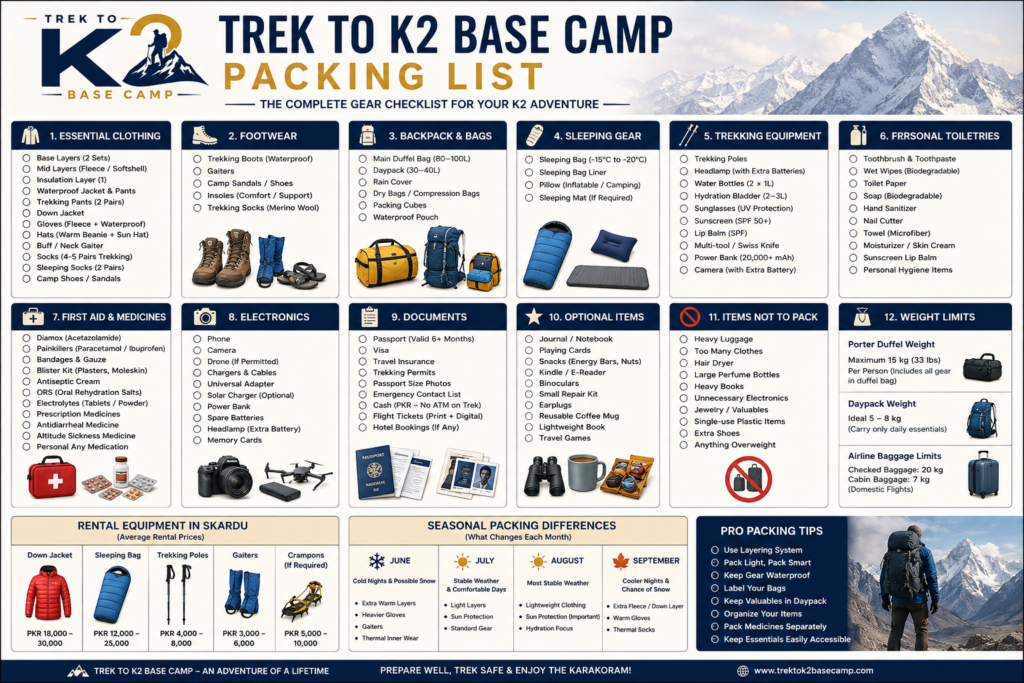
Printable K2 Base Camp Trek Packing Checklist
Frequently Asked Questions (FAQs)
1. Can I rent trekking gear in Skardu?
Yes. Skardu is the main trekking hub for the Karakoram and offers several outdoor equipment rental shops where you can rent high-quality trekking gear before starting your expedition. Common rental items include down jackets, sleeping bags, trekking poles, gaiters, crampons (if required), and duffel bags. Renting equipment is an excellent option for international trekkers who prefer to travel light or do not own specialized mountain gear. If you’re trekking with Trek To K2 Base Camp, we can also help arrange reliable rental equipment before your arrival.
2. Do I really need a -20°C sleeping bag?
Yes. A sleeping bag with a comfort rating of -15°C to -20°C is strongly recommended for the K2 Base Camp Trek. Although daytime temperatures can be pleasant during the trekking season, nights at Goro II, Concordia, and K2 Base Camp regularly fall below freezing. A properly rated sleeping bag will help you stay warm, recover better after long trekking days, and reduce the risk of cold-related discomfort. If you don’t own one, high-quality sleeping bags can be rented in Skardu.
3. Are trekking poles necessary?
While trekking poles are not mandatory, they are highly recommended for the K2 Base Camp Trek. The Baltoro Glacier features uneven moraine, loose rocks, glacier ice, and long ascents and descents that can place considerable stress on your knees and ankles. Trekking poles improve balance, reduce fatigue, and provide extra stability throughout the expedition, especially during glacier crossings and steep sections.
4. Can I wash clothes during the trek?
Laundry facilities are not available during the trek. Most trekkers carry enough base layers, socks, and underwear for the expedition and wash small items only when weather conditions allow. Since drying clothes at high altitude can take a long time, quick-drying synthetic or merino wool clothing is highly recommended. Wet wipes are also useful for maintaining personal hygiene during the journey.
5. How much luggage can porters carry?
Most trekking companies allow 15 kg (33 lbs) of personal gear per trekker in the porter-carried duffel bag. This limit helps ensure the safety of the porters and keeps expedition logistics efficient. Your personal daypack, usually weighing between 5 and 8 kg, stays with you throughout each trekking day and contains water, snacks, extra clothing, valuables, and personal essentials.
6. Should I bring cash?
Yes. Once you leave Skardu, there are no ATMs or banking facilities along the trekking route. Carry enough Pakistani Rupees (PKR) for personal expenses such as snacks, drinks, staff tips, equipment rental, or unexpected purchases before starting the trek. Keep your cash in a waterproof pouch and divide it into separate locations for additional security.
7. Is a down jacket mandatory?
Absolutely. A warm down jacket is considered essential for the K2 Base Camp Trek. Temperatures at higher camps often drop below freezing after sunset, and a quality insulated jacket keeps you warm during evenings, early mornings, and rest stops. Even during July and August, when daytime weather is relatively mild, a down jacket remains one of the most important items in your packing list.
8. Can I wear trail running shoes instead of trekking boots?
For the K2 Base Camp Trek, waterproof trekking boots with good ankle support are strongly recommended. Much of the route crosses rocky moraine, glacier terrain, and uneven trails where additional stability is important. Lightweight trail runners may be suitable for experienced ultralight hikers, but for most trekkers, proper hiking boots provide greater comfort, protection, and safety throughout the expedition.
9. What backpack size is best?
Most trekkers use two bags during the expedition:
- Duffel Bag: 80–100 liters for gear carried by porters.
- Daypack: 30–40 liters for items carried during daily trekking.
A properly fitted daypack with padded shoulder straps, a hip belt, and hydration compatibility provides the best balance between comfort and storage capacity
10. Can I charge my phone during the trek?
Electricity is available in Islamabad and Skardu hotels, but once the trek begins, charging opportunities become extremely limited. Carry a 20,000–30,000 mAh power bank to keep your phone, camera, and other electronic devices charged throughout the expedition. Cold temperatures reduce battery life, so keep electronics inside your sleeping bag or jacket overnight whenever possible.
11. Is travel insurance required?
Although not legally required, comprehensive travel insurance is highly recommended for all trekkers. Your policy should include coverage for high-altitude trekking, emergency medical treatment, trip interruption, and helicopter evacuation if necessary. Before purchasing insurance, verify the maximum altitude covered by your policy.
12. What is the best month for the K2 Base Camp Trek?
The trekking season typically runs from June to September.
- June: Cooler temperatures and fewer trekkers.
- July: Stable weather and ideal trekking conditions.
- August: The most popular month with excellent mountain views.
- September: Beautiful autumn scenery, quieter trails, and cooler nights.
For most trekkers, July and August provide the best combination of weather, accessibility, and overall trekking conditions.
Ready for Your K2 Base Camp Adventure?
Packing correctly is the first step toward a successful expedition, but choosing the right trekking company is equally important. At Trek To K2 Base Camp, we help trekkers prepare long before they arrive in Pakistan by providing detailed gear advice, pre-departure support, and personalized packing recommendations based on the season and itinerary.
Whether you’re joining our classic 21-Day K2 Base Camp Trek or our exclusive Founder-Led 18-Day K2 Base Camp & Gondogoro La Trek, our experienced local team ensures you’re fully prepared for one of the world’s greatest trekking adventures.
Why Trek with Trek To K2 Base Camp?
- Expert pre-trip gear consultation
- Assistance with equipment rental in Skardu
- Small group departures for a better experience
- Experienced local guides and licensed support staff
- Transparent pricing with no hidden costs
- Personalized support from your first inquiry until the end of your expedition
- Safety-focused itineraries with proper acclimatization
- High-quality camping equipment and professional logistics